Spray Foam Removal Near Me: How to Find Trusted Local Specialists in 2026
When you search "spray foam removal near me," you're taking the right first step. Spray foam removal is not a task to assign to anyone — it requires specialist knowledge, the right equipment, and the ability to produce documentation that your mortgage lender will accept.
But here's what many UK homeowners discover: the best specialist for your property may not be the one closest to your home. In this guide, we'll walk you through how to search effectively for spray foam removal specialists, what to look for in a contractor, and when going national (rather than purely local) is actually the smarter choice.
Why Searching "Spray Foam Removal Near Me" Is the Right First Step
When facing spray foam removal, the instinct to search locally makes sense. You want someone who understands your area, knows local building control, and can come quickly. But this search should be the beginning of your evaluation, not the end of it.
Here's why it matters:
- Local contractors may lack specialist experience: Many general builders, roofers, and handymen offer foam removal as a sideline service. They may have removed foam once or twice, but lack the detailed experience that ensures lender-compliant work.
- Mortgage lenders don't care where the contractor is based: They only care whether the removal is complete, properly documented, and backed by an independent certificate that proves all foam is gone and timbers are structurally sound. A contractor 50 miles away who produces the right certification is better than a neighbour's cousin who cuts corners.
- Specialist companies often cover wider areas than you'd expect: The best UK spray foam removal specialists now operate nationally or across large regions. They have the equipment to mobilise quickly and the experience to handle any foam type or roof geometry.
What to Look for in a Local Spray Foam Removal Company
If you do locate a local contractor, here are the specific criteria that matter:
1. Specialist Volume and Experience
The most important question: "How many spray foam removals have you completed in the past 12 months?"
- Genuine specialists complete 20+ removals per year
- General builders or roofers may have done 2-5 foam removals in their lifetime
- Ask for the specific number — vague answers like "quite a few" are a warning sign
A contractor who regularly removes spray foam will understand the technical challenges: how foam behaves in different temperatures, how to access concealed areas, how to handle different foam types (open-cell vs. closed-cell), and how to document work thoroughly.
2. Post-Removal Certification Process
Before hiring, confirm their certification approach:
- Do they issue a post-removal certificate? Essential — the certificate is proof for your lender.
- Is the certificate issued by an independent party? Best practice involves an independent RICS-aligned surveyor or property inspector conducting a final inspection.
- Have previous customers successfully remortgaged or sold after their removal? Reputable specialists will have testimonials from customers who passed subsequent mortgage surveys.
Ask for examples of their certificates. Generic or vague certificates often get rejected by lenders. The certificate should explicitly state:
- All spray foam has been removed
- Timbers have been inspected and are structurally sound
- Photographic evidence of the cleared roof space
3. Insurance and Credentials
Before signing anything, request documentation for:
- Public liability insurance (minimum £1 million) — protects you if the contractor damages your property
- Employer's liability insurance — required by law for any company with employees
- Professional indemnity insurance — covers claims from professional negligence
Absence of proper insurance is a major red flag. If something goes wrong and they're uninsured, you have no recourse.
4. Transparent Quoting and Process
A professional contractor will:
- Conduct an on-site survey before quoting (never quote over the phone without inspection)
- Provide an itemised quote specifying which areas will be cleared, what's included, and what certification will be provided
- Explain their removal process step by step
- Clarify what happens if they discover rot or structural damage
- Specify timeline and mobilisation
Vague quotes or pressure to decide quickly are warning signs.
10 Key Questions to Ask Before Hiring
Before committing to any contractor — local or otherwise — ask these questions and listen carefully to the answers:
Essential Questions
"How many spray foam removals have you completed in the past 12 months?"
- Look for a clear number (20+) rather than vague answers
"Can you show me examples of your post-removal certificates?"
- Review what the certification includes and whether it would satisfy a mainstream lender
"Who issues your post-removal certificate — is it you, or an independent inspector?"
- Independent certification is stronger for lender purposes
"Can you provide references from previous customers who have successfully sold or remortgaged after your removal?"
- Genuine specialists will have multiple satisfied customers
"What is your approach if we discover rot or structural damage during the removal?"
- Get clarity on scope creep and how additional work is priced
"How do you handle foam concealed behind battens, in eaves, or around fixings?"
- This reveals whether they understand the technical complexity of the job
"What insurance do you carry, and can you provide certificates?"
- Public liability, employer's liability, and professional indemnity are all important
"Will you be removing the foam yourself, or subcontracting the work?"
- Know who is actually doing the work and whether they're properly trained
"How quickly can you mobilise, and how long will the removal take?"
- Understand timelines and disruption to your home
"What is your total quote, itemised by task, and what is included or excluded?"
- Get clarity on exactly what the £X,XXX covers
Red Flags to Watch For With Local Contractors
Stop proceeding if any of these apply:
- Quotes over the phone without a site visit — Impossible to price accurately without seeing the roof space
- Vague or self-issued certificates — If they won't arrange independent verification, your lender may reject the work
- Unusually low quotes — Professional, lender-compliant removal costs £2,500–£5,000 for a typical 3-bed semi. Quotes well below this usually mean corners are being cut
- No traceable reviews or online presence — Search "[company name] reviews" on Google. Absence of reviews or generic reviews are warning signs
- Pressure to decide quickly — Reputable contractors expect you to gather quotes and think it over
- Unwillingness to explain their process — A professional should confidently walk you through their methodology
- No insurance documentation — Uninsured contractors expose you to significant risk
- Reluctance to provide references — Specialists with genuine experience will have satisfied customers willing to speak about the work
When National Specialists May Be Better Than Local Contractors
Here's an important truth: the "best" contractor for your spray foam removal may not be the closest one to your home.
Advantages of choosing a national specialist over a purely local contractor:
Specialisation: They've removed spray foam from hundreds of properties, not dozens. They understand every variation and challenge.
Consistent methodology: Their process is proven and repeatable. They know what works and what doesn't.
Better equipment: Specialist companies invest in the right tools — vacuum systems, filtration, respiratory protection, measuring devices — because they use this equipment constantly.
Stronger certification: National specialists typically arrange independent RICS-aligned inspection and certification, which is stronger for lender purposes than self-certification.
Nationwide logistics: They can mobilise quickly across the UK. Your location — whether you're in Scotland, Northern England, or the South West — doesn't matter.
Tried-and-tested customer support: Large specialists have systems for quoting, invoicing, communication, and follow-up. Your removal is managed professionally from start to finish.
Recourse and accountability: A national company with an online presence, multiple customer reviews, and professional standards is more accountable than a local operator working alone.
The mathematics of choosing: If a local general builder charges £2,000 for removal they've done twice before, versus a national specialist charging £3,500 for removal they've done 200 times, the specialist is the lower-risk choice. The price difference is insurance against a failed removal that will cost you thousands more to remedy.
The Importance of Lender-Compliant Removal Certificates
This point cannot be overstated: the quality of your removal certificate directly affects whether your mortgage lender will accept the work.
Here's what lenders are looking for:
- Comprehensive inspection documentation: Photographic evidence showing the roof space is completely clear of foam
- Timber inspection records: Evidence that timbers have been inspected and are structurally sound
- Independent verification: Ideally, the certificate is issued by an independent surveyor or property inspector, not the contractor who did the work
- Specific language: The certificate must explicitly state that all spray foam has been removed and timbers are clear
A weak or self-signed certificate — even if the removal work itself was technically sound — can still lead to a lender rejection at survey stage.
Before hiring any contractor, confirm with your specific mortgage lender what they will and won't accept. Some lenders have specific requirements or preferred certifiers. Work backwards from your lender's requirements.
For comprehensive information on our spray foam removal services, visit our main service page.
Why Revive Maintenance Covers the Whole UK
Revive Maintenance is a national specialist in spray foam removal. We operate across England, Scotland, Wales, and Northern Ireland. Here's why this matters to you:
- We complete 50+ removals per month across the UK, giving us unparalleled experience with every foam type, roof geometry, and structural challenge
- We arrange independent RICS-aligned inspection and certification for every removal, ensuring your lender will accept the work
- We mobilise quickly — often within 1-2 weeks, even if you're in a remote area
- We handle the entire process: from initial survey through to the final independent inspection and certification
- We guarantee lender acceptance — if your removal doesn't pass a subsequent mortgage survey, we'll remediate at no additional cost
Whether you're "near" us geographically or hundreds of miles away, choosing a national specialist means your removal is treated with the same professionalism and expertise as every other property we work on.
For more information on how to choose a spray foam removal company, or to request a free quote, contact us today.
Cost Expectations for Professional Removal
How much should you expect to pay for professional spray foam removal in the UK?
Typical costs in 2026:
- Small bungalow or flat (100–150 m² roof space): £1,800–£2,500
- 3-bed semi-detached house (150–250 m² roof space): £2,500–£4,000
- 4-bed detached house (250–350+ m² roof space): £3,500–£5,500+
- Complex roof geometries or difficult access: £400–£800 additional labour
What's included in a professional quote:
- Site visit and survey
- Complete foam removal from all accessible areas
- Timber inspection and documentation
- Safe debris disposal
- Independent post-removal certification
- Photographic evidence
- Written report with findings
What to be cautious of:
- Quotes significantly below £2,000 for any substantial property — these often represent incomplete removal
- "Additional charges" discovered mid-work for structural issues — clarify in advance how these are handled
- Quotes that don't include independent certification — you'll face lender rejection
- Quotes for removal only, without timber inspection — lenders expect both
The most cost-effective approach is to get quotes from 2-3 specialist companies, all including independent certification, and choose based on experience and professionalism — not simply the lowest price.
The Spray Foam Removal Process: Step by Step
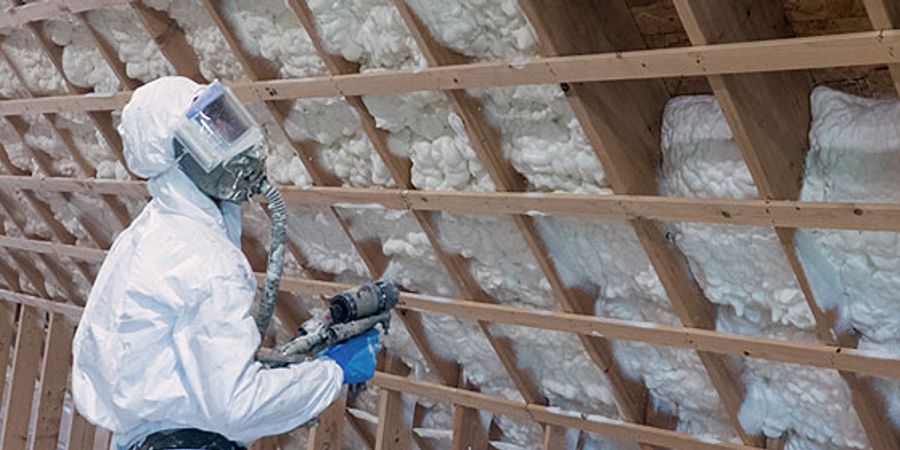
Here's what to expect when professionals arrive to remove spray foam from your roof space:
1. Preparation and Setup (1-2 hours)
- Protective sheeting is laid across the loft and down through the property to contain dust
- Respiratory protection and PPE are set up
- Vacuum and filtration equipment is positioned and tested
- The work area is isolated to prevent contamination of living spaces
2. Initial Assessment (30-60 minutes)
- The contractor inspects the full extent of the foam and assesses the best removal approach
- Notes are made about foam type (open-cell or closed-cell), thickness, and condition
- Any visible damage to timbers is recorded
- The approach is adjusted based on roof geometry, access, and local conditions
3. Foam Removal (4-8 hours, depending on extent)
- Foam is mechanically removed using specialised scrapers and tools
- Debris is continuously vacuumed into sealed containers to prevent dust and fibres escaping
- Areas behind battens, in eaves, and around fixings are systematically cleared
- Timbers are inspected during removal for damage or rot
4. Timber Inspection and Documentation (2-4 hours)
- All exposed timbers are carefully examined for structural soundness
- Photographic evidence is taken of cleared areas and timber condition
- A detailed report is compiled with before/during/after images
- Any damage or rot is noted and recommendations for further work (if needed) are made
5. Final Inspection (1-2 hours)
- An independent RICS-aligned surveyor conducts a final walkthrough
- The roof space is inspected to confirm complete foam removal
- Timbers are re-checked for soundness and condition
- The surveyor issues a post-removal certificate
6. Cleaning and Removal of Protective Sheeting
- Protective sheeting is carefully removed and disposed of
- The loft is swept and wiped down to remove any remaining dust
- Access points are sealed and made good
- The property is returned to normal
FAQ: Spray Foam Removal Near Me
Q: Can I remove spray foam myself?
A: Not advisable. Spray foam removal involves specialist equipment, respiratory hazards, and the need for professional certification. DIY removal almost always fails at the mortgage survey stage because lenders won't accept homeowner-issued certificates. Always hire a professional.
Q: How long does spray foam removal take?
A: Typically 1-3 days, depending on the extent of foam and roof complexity. Larger properties or difficult access may take longer.
Q: Will spray foam removal damage my roof?
A: Not when done by professionals. Modern removal techniques use mechanical tools and vacuuming rather than chemicals that could harm the structure. Any underlying damage (rot, structural weakness) is revealed during removal, not caused by it.
Q: What happens if rot is found during removal?
A: The contractor should pause removal and provide a quote for remedial timber work. Clarify in advance who handles this work (the removal contractor or a separate specialist) and how it's priced. Most contracts allow for remedial work to be quoted and approved separately.
Q: Will my mortgage lender accept the removal certificate?
A: If the certificate is issued by an independent surveyor and includes photographic evidence and timber inspection, yes. Before hiring, ask the contractor which lenders have previously accepted their certificates, and contact your lender to confirm their specific requirements.
Q: Can I stay in my home during removal?
A: Yes, but the loft will be inaccessible and there will be noise and vibration. Many homeowners choose to spend the day away from home. Ask your contractor about their recommendation.
Q: How much does spray foam removal cost?
A: £2,000–£5,000+ for a typical UK property, depending on foam extent and roof complexity. Always get quotes from multiple specialists and ensure all quotes include independent certification.
Q: What's the difference between open-cell and closed-cell foam removal?
A: Closed-cell foam is denser and more difficult to remove — it takes longer and may cost more. Open-cell foam is lighter but often more extensive. Both require the same lender-compliant documentation.
Q: How do I find a spray foam removal specialist near me?
A: Search online for "spray foam removal near me" or "spray foam removal [your area]." Check Google reviews, request quotes from multiple companies, verify insurance, and ask for references. Alternatively, contact a national specialist who can cover your area. For many homeowners, a national company offers better peace of mind than a purely local operator.
Q: What if I'm not happy with the removal?
A: A reputable contractor will stand behind their work. Clarify upfront what the guarantee or remedial policy is. Many specialists offer a guarantee that if the removal fails a subsequent mortgage survey, they'll return and remediate at no cost.
Next Steps: Getting Professional Help
If you've searched "spray foam removal near me" and are ready to take the next step, here's what to do:
Get a free survey and quote from a specialist removal company. Most UK specialists offer free initial surveys and firm quotes with no obligation.
Request references from customers who have successfully remortgaged or sold after removal — this is the acid test of a contractor's quality.
Confirm lender acceptance — email your mortgage lender with details of the contractor and their certification process, and ask whether they will accept the removal certificate.
Review the contract before signing. Ensure it specifies scope of work, certification included, timeline, and what happens if additional work is discovered.
Relax — once you've hired a professional, the removal is in expert hands. You'll get documentation that satisfies your lender and restores your property to full mortgageability.
For a free quote from Revive Maintenance — covering the whole UK — request an estimate online or read our comprehensive guide on how to choose a spray foam removal company.
The Bottom Line
Searching "spray foam removal near me" is the right instinct, but remember: the best contractor for your removal is the one with the specialist experience, the right certification process, and the track record of lender-accepted removals — not necessarily the one closest to your postcode.
Take time to evaluate your options, ask the right questions, and prioritise lender-compliant documentation over the lowest price. A removal done well — with independent certification — is a one-time investment that restores your property's value and mortgageability.
Revive Maintenance operates nationwide and is ready to help. Get your free quote today.